How to Choose a House Bowling Ball That Fits
Choose control before impressive arithmetic
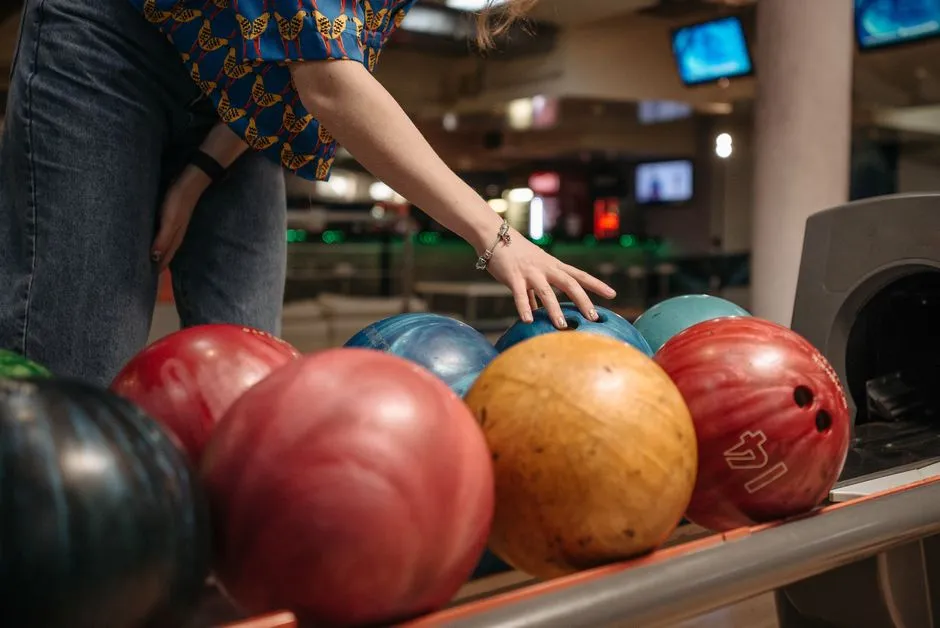
Choose a house bowling ball by finding a manageable weight, then checking that the thumb enters and exits smoothly and the finger holes support a comfortable conventional grip without squeezing. Make several slow practice swings in a safe area only if center rules permit. If the ball pulls the wrist down, sticks, causes pain, or cannot be controlled through the motion, choose another.
The bowling-basics section rejects universal body-weight formulas. Strength, age, injury history, technique, hole layout, and grip all affect what is controllable.
Start lighter, then test deliberately
Select a ball that can be held securely with the bowling hand and supported by the other hand during setup and carrying. Heavier is not automatically better, and a ball that can be lifted once may still be too demanding across a full game.
Keep the wrist in a comfortable position and make a small controlled swing beside the body, away from people, racks, and equipment. Do not imitate a full approach off the lane. If the shoulder rises, the wrist collapses, the hand grips hard, or control fades after a few motions, try a lighter ball.
Children and anyone with pain, weakness, limited mobility, or a prior injury should use center staff, a qualified coach, or an appropriate health professional for individualized help. Stop when pain, numbness, or tingling appears. A score screen cannot award bonus pins for ignoring a tendon.
Check the thumb before the fingers
Insert the thumb fully. It should feel supported but should leave without force when the hand relaxes and the thumb exits in the intended direction. A hole that pinches, scrapes, or traps the thumb is not a challenge to be conquered with extra speed.
House balls use fixed hole sizes and spans, so two balls with the same weight may fit very differently. Try several. Do not apply powders, tape, liquids, or alterations to center equipment unless staff explicitly permits and provides them.
For a conventional house-ball grip, place the middle and ring fingers into their holes to a comfortable depth commonly near the second joint, without forcing. The palm should rest naturally rather than stretch flat or bunch tightly. Fit varies, and a drilled personal ball may use a different grip fitted by a professional.
Test the span without hanging from the ball
With the thumb seated and fingers placed comfortably, check whether the hand lies relaxed across the ball. Excessive stretch can make release difficult; a cramped span can encourage squeezing. You should not need to claw the holes to keep the ball attached during a gentle supported position.
Use both hands to return the ball to the rack. Never leave it on the approach or floor, and keep fingers clear when balls arrive in the return. If a ball does not return, tell staff rather than reaching into machinery.
Match the ball to the entire session
Throw one or two controlled deliveries if a lane is assigned and staff rules allow. Notice balance, grip pressure, thumb exit, and whether the ball can be set down smoothly rather than dropped. A thump at the foul line may indicate timing or fit trouble, excessive weight, or technique that needs coaching.
Do not cross the foul line; lane oil can make the surface beyond it slippery. Wear approved bowling shoes, keep the approach dry, and yield appropriately to nearby bowlers under the center's etiquette.
The guide to a repeatable spare-practice routine works only when the equipment stays consistent, while practice games helps record whether a change actually helped. If house-ball options never fit comfortably, a reputable pro shop can measure a personal fit. Custom drilling is not mandatory for casual fun, but it is more sensible than spending every frame trying to persuade the wrong holes to release your thumb.