Bowling Spare Practice: Build a Repeatable Routine
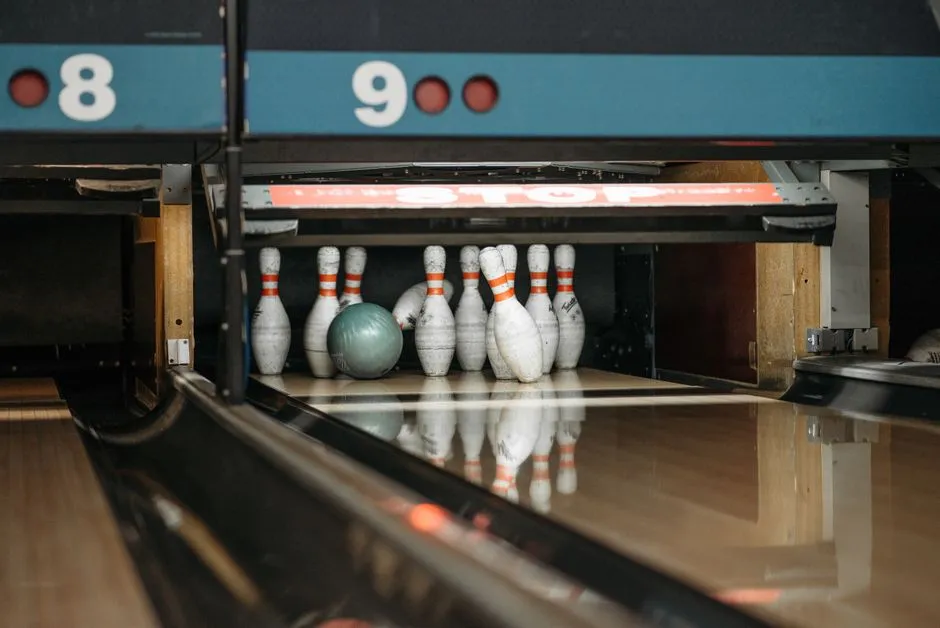
Practice one spare family at a time
A useful bowling spare routine repeats a pre-shot setup, uses a straighter controllable release, records where the ball crossed a chosen lane target, and changes only one variable after a consistent miss. Begin with single corner pins or another spare your center can safely set, then practice the mirror side separately.
The practice-games section treats ten deliveries with ten different fixes as a suspense series, not a drill.
Keep the safety routine identical
Wait for the ball return to stop before collecting your ball, keep fingers away from moving equipment, and check that the approach is clean and dry. Yield to bowlers on nearby lanes according to center etiquette. Do not step beyond the foul line, where lane conditioner can make the surface slippery.
Use a ball that fits and remains controllable. The house-ball selection guide covers weight, thumb exit, and span. Stop if the hand sticks or you feel pain, tingling, or numbness; practice cannot improve a release the ball refuses to release.
Choose a visual target before moving your feet
Select one visible target on the lane, such as an arrow or board area, based on your normal spare system or coaching. Look at that target during the delivery rather than shifting attention between the pin, arrows, and scoreboard animation.
Many bowlers use a relatively straight spare release because it reduces the lane-condition response that a strongly hooking delivery can introduce. That is a general principle, not a required technique for every bowler or physical ability. Use qualified coaching for an individualized line.
Record four details before the first attempt:
- starting foot position;
- visual target;
- intended ball speed or effort cue;
- spare pin or leave being practiced.
The notes need consistency, not an architectural drawing of the lane.
Roll a baseline set
Make five attempts with the same setup. After each, mark one result:
- converted;
- missed left of the intended pin or target line;
- missed right;
- execution changed or unclear.
Also note whether the ball crossed the selected target. A pin can fall after a poor delivery, and a sound delivery can miss because the chosen line needs adjustment. Separating execution from outcome prevents a lucky bounce from becoming permanent policy.
If your center cannot set specific leaves, use an available practice mode, work with a coach, or aim at a defined board path during ordinary frames without disrupting play. Never enter the lane or pinsetter area to arrange pins yourself.
Adjust one variable after a pattern appears
Do not move after every miss. First look for a pattern across several reasonably repeated attempts. When the ball consistently crosses the chosen target but misses the spare on one side, make one small foot-position or target adjustment within the spare system you use. Keep everything else as stable as practical for the next five attempts.
If the ball misses the visual target in different directions, the priority is repeatable setup and delivery rather than a new aiming calculation. Slow the routine, check balance, and seek coaching if the pattern continues.
Lane conditions, ball surface, speed, release, and angle affect the path. An exact board move copied from another bowler is not automatically transferable, particularly when handedness and hook direction differ.
Practice the opposite corner separately
The 7 pin and 10 pin are mirror locations on the back row, but the delivery may not feel like a mirror. Practice each side with its own recorded starting position and target. Left- and right-handed bowlers may choose different paths based on release and lane use.
Finish with a short mixed set in which the spare changes and you must recall the correct setup. That tests the routine rather than only the muscle memory of one repeated line.
Use the bowling-basics section to keep stance and approach cues simple. Review the notes after the session: retain an adjustment that produced more target crossings and conversions across repeated attempts, not merely the final dramatic strike at a single pin. Spare practice is gloriously uncinematic. The reward is that an ordinary leave begins to feel like a familiar piece of work.